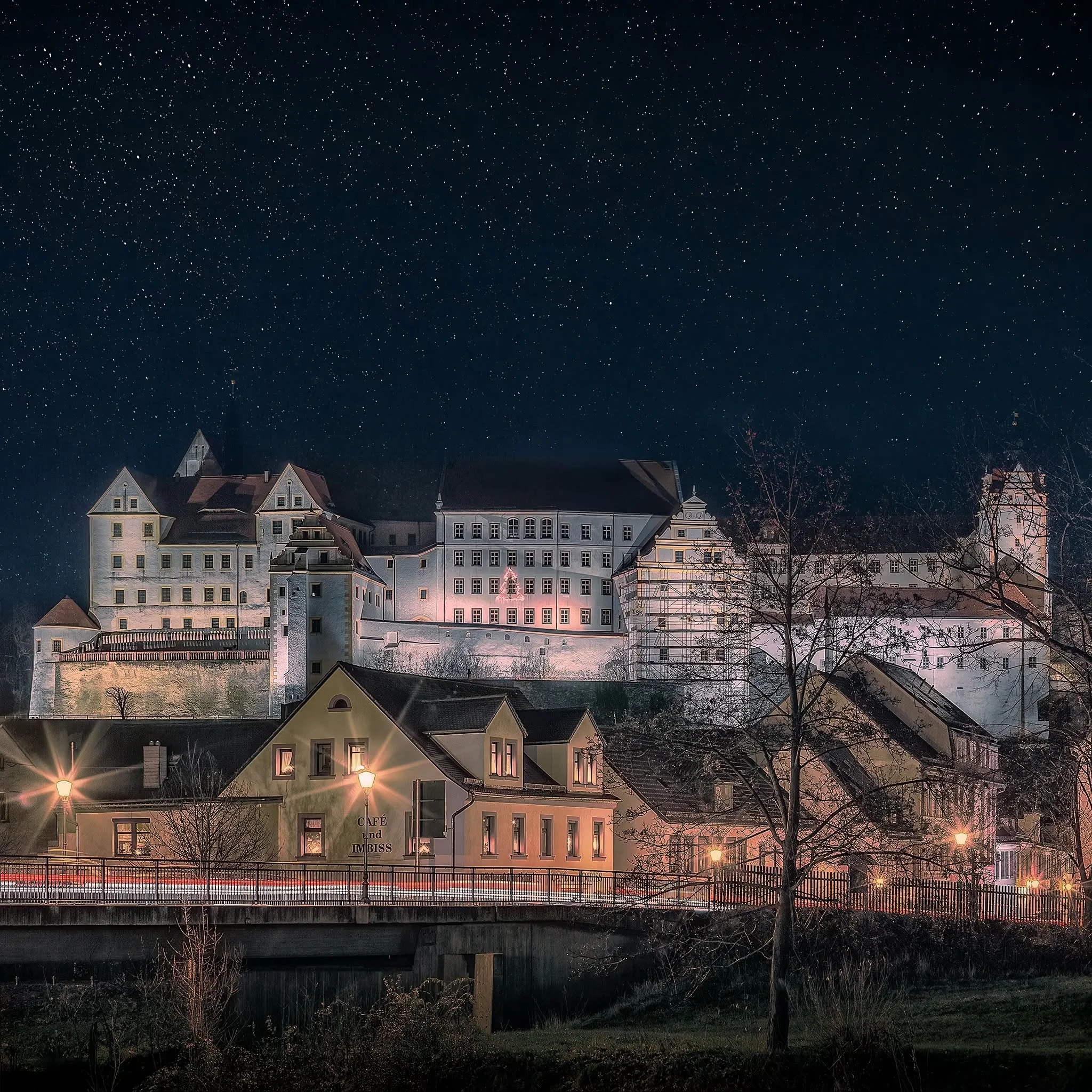
Berlin, Colditz, Auschwitz and Krakow
October 2026
In early October 2026 I flew to Berlin on my own on a day tour, in advance of taking a group of City traders to this amazing city, later in the month; followed by Colditz Castle and Krakow in Poland. My contact for this tour was Alex Mackie, a fellow Liveryman with the Tallow Chandlers Company.
On this recce, I met up with my old friend Dietmar who drove me on a whistle-stop tour to the various places that would form the basis of my Berlin tour for the group - but first I had to find the exact coach meeting point at Berlin Airport. If I achieved nothing else on this day return recce, this was worth it. In fact, it was a bruising but highly valuable recce. I am a fairly experienced Berlin guide, very familiar with Colditz Castle (my father was a POW there 1940-45) but Krakow was really just a name which seemed to conjure up the Jewish heartbreak of World War Two. Our group arrangements were made by Zoe Pearce of CGT Tours who I knew from the Army Training Regiment contract 2000-2007.
My story starts 4 years ago, when I received a frantic call from my friend Alex. He had been badly let down by his Normandy guide who, I believe, had ‘lost’ some of the money. Fortunately, I was available and, being a specialist and qualified in Normandy, agreed to take on the tour. It became one of the most enjoyable tours of recent years. You see, they were all City friends, a sort of trading club if you like. They were charming and appreciative, and they made me feel like one of them – well, I had been a stock exchange dealer!
However, wind forward to 2025 when Alex told me the same group of City traders wanted to visit Auschwitz and I proposed a tour which included Berlin, Colditz and Auschwitz. The group met at Gatwick North, very early on 21 October 2026 for the EasyJet flight to Berlin Brandenburg Airport, in East Berlin. We found the coach with ease, (but thank goodness for the recce) and I then had to justify why we were going to drive from East Berlin all the way to Charlottenburg in the West! We duly arrived at the Berlin war cemetery on a late autumnal afternoon, to be greeted by Dietmar playing his pipes (and he is very good.) The purpose of this long drive from East to West was to see the graves of Colditz POWs Captain ‘Pop’ Olver, who died of illness inside Colditz Castle aged 51; he won the MM in The Great War; and then with piper Dietmar playing, we all walked to the grave of possibly the greatest escaper of WW2, Michael Sinclair DSO, killed whilst trying to escape from Colditz in September 1944. My father told me that he and his colleagues who were close to Mike Sinclair, felt that he had become almost suicidal after the news of his brother’s death in Anzio in January 1944 and the death of his great regimental friend Ronnie Littledale whilst commanding his regiment in the breakout of Normandy.
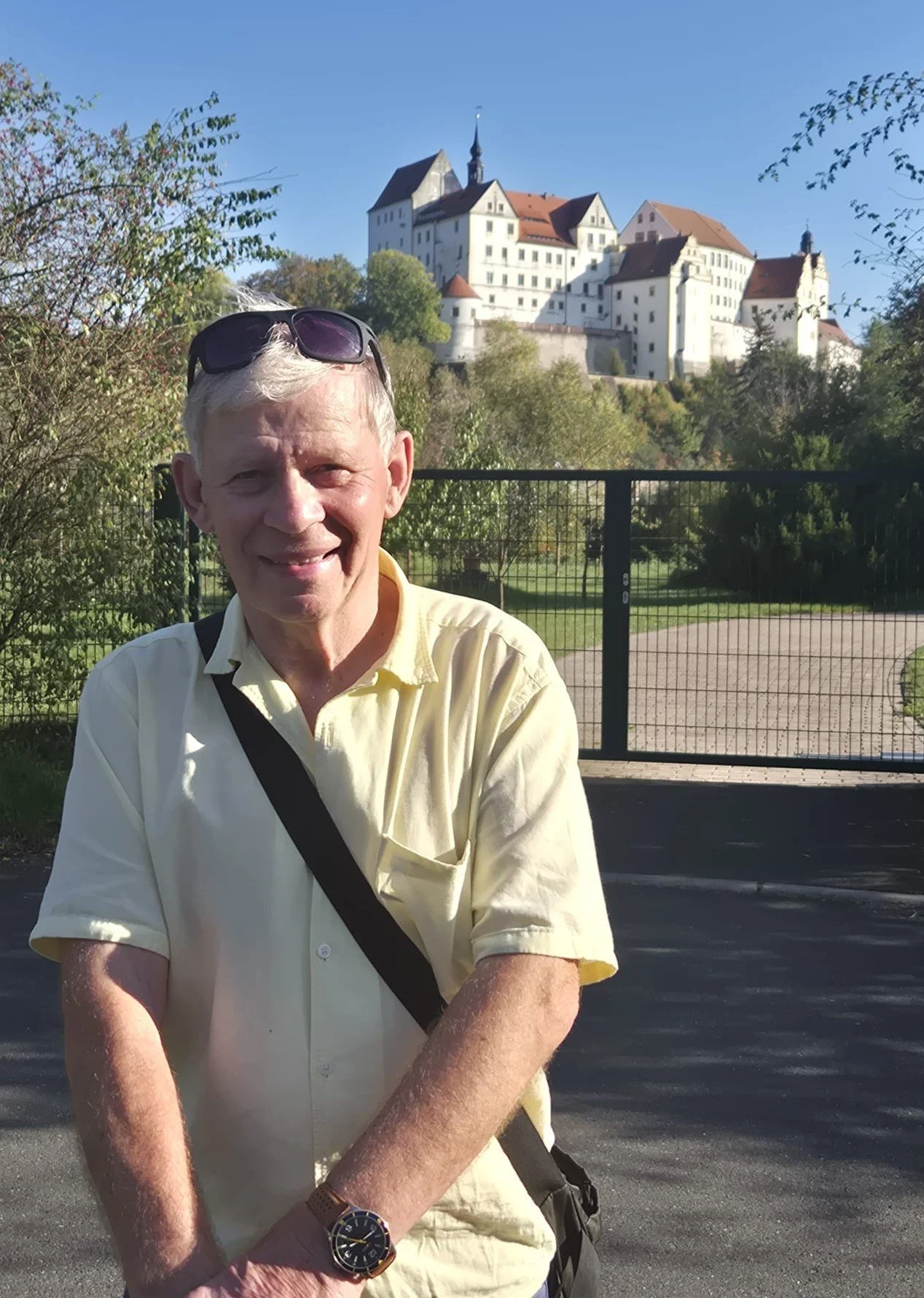
We then drove to the Olympic Stadium forever associated with the 1936 Olympics in which the black runner Jesse Owens ruined Hitler’s dream of Aryan supremacy; and from there we walked to a position where we could take a photograph of the former headquarters of the British Berlin Brigade. (Photo 1)
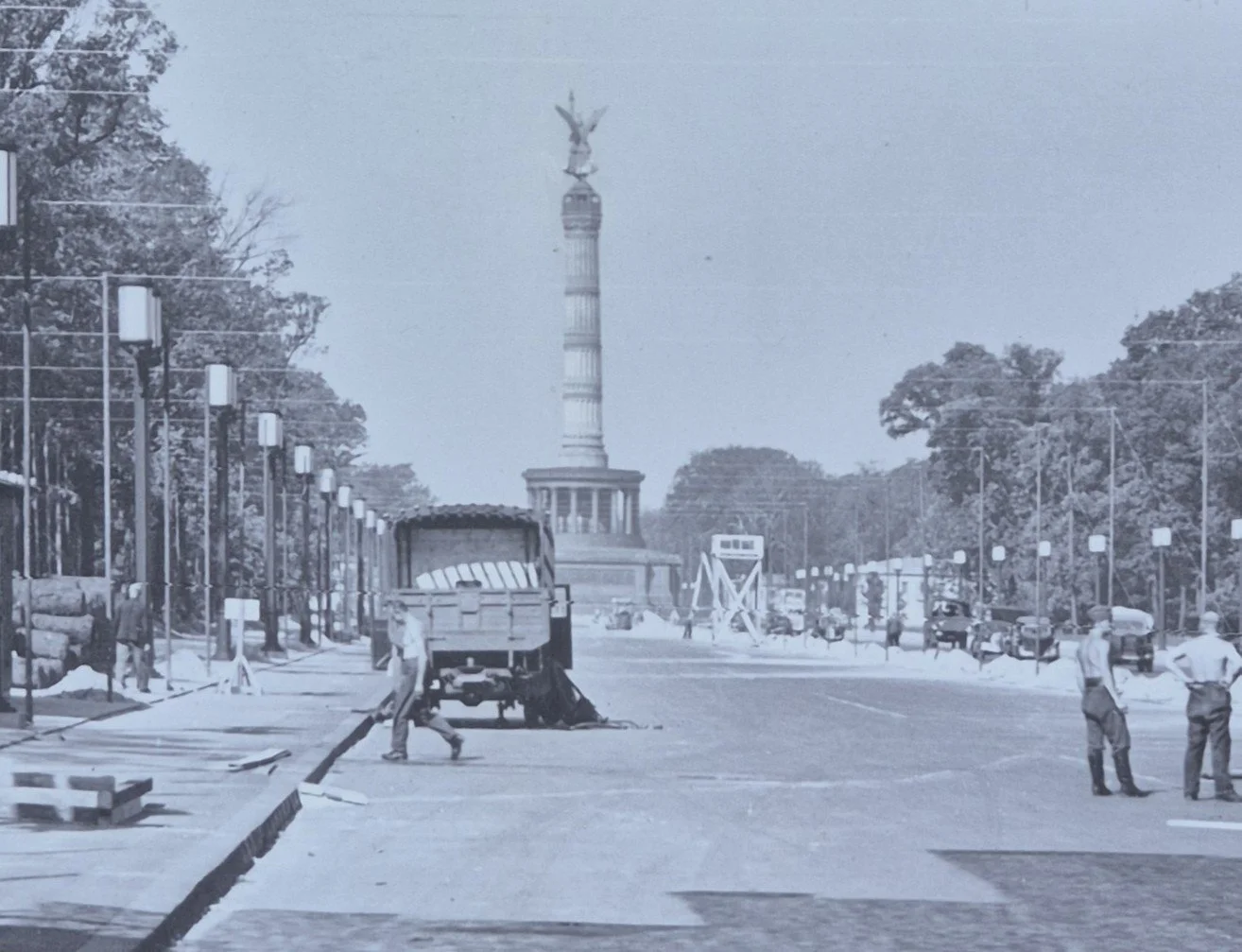
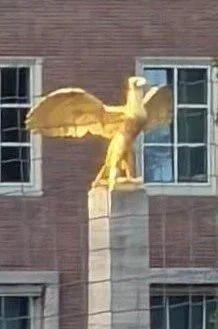
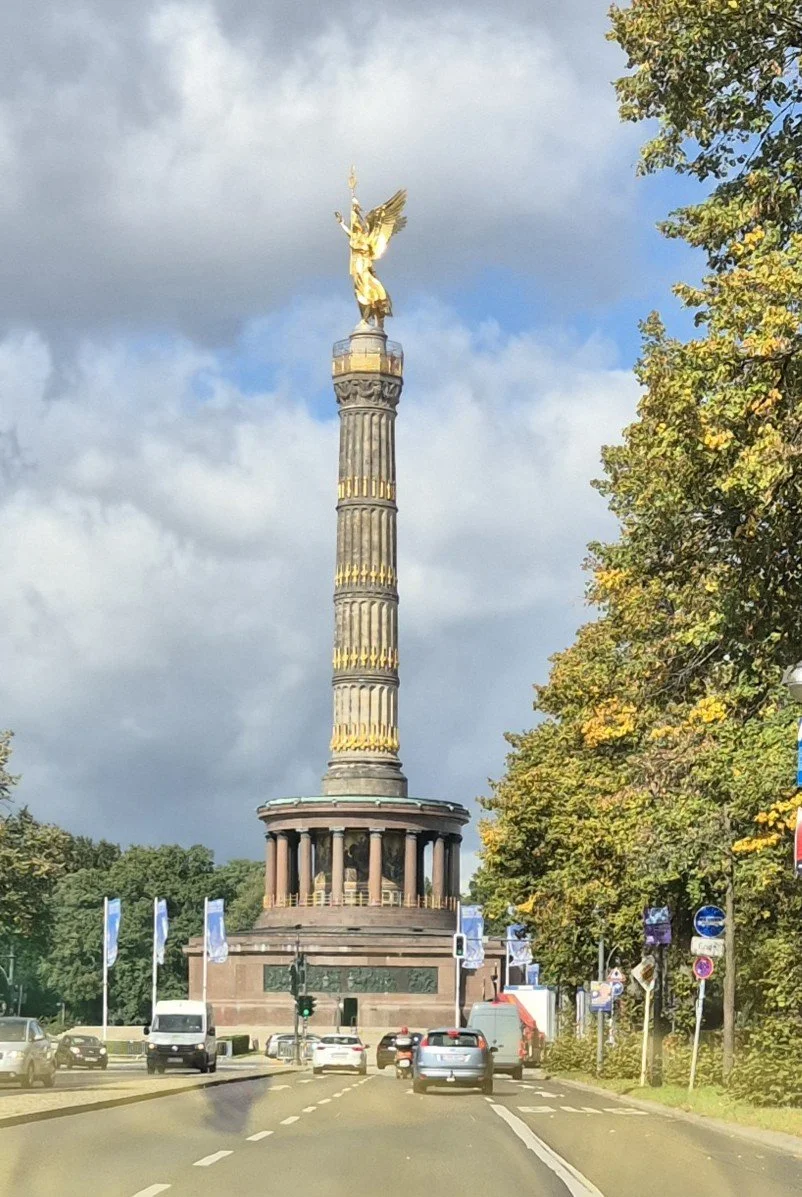
I then took them on a coach tour around West Berlin including the Kaiser Wilhelm Church, heavily bombed in November 1943 by the Royal Air Force; with its broken tooth remains of the central tower, it stands as a symbol of peace. The cross inside is made of nails from Coventry Cathedral. We drove through the Tiergarten, once a hunting forest for the Electors (Princes) of eg Prussia. All the old trees had been removed for the war effort and now re-planted and is very much a Lover’s Lane. We stopped the coach for a photograph of the Victory Column; usually associated with the Franco-Prussian War (1870-71), it actually stands as a monument to Prussia's defeats of Denmark and Austria as well as France. The fourth tier was added by Hitler making it a 67-metre-tall monument. Around the remarkable statue are cannon barrels taken from the various defeats and topped by the golden statue, named after the Roman goddess of Victory, known locally as Goldelse. (Photo 2&3)
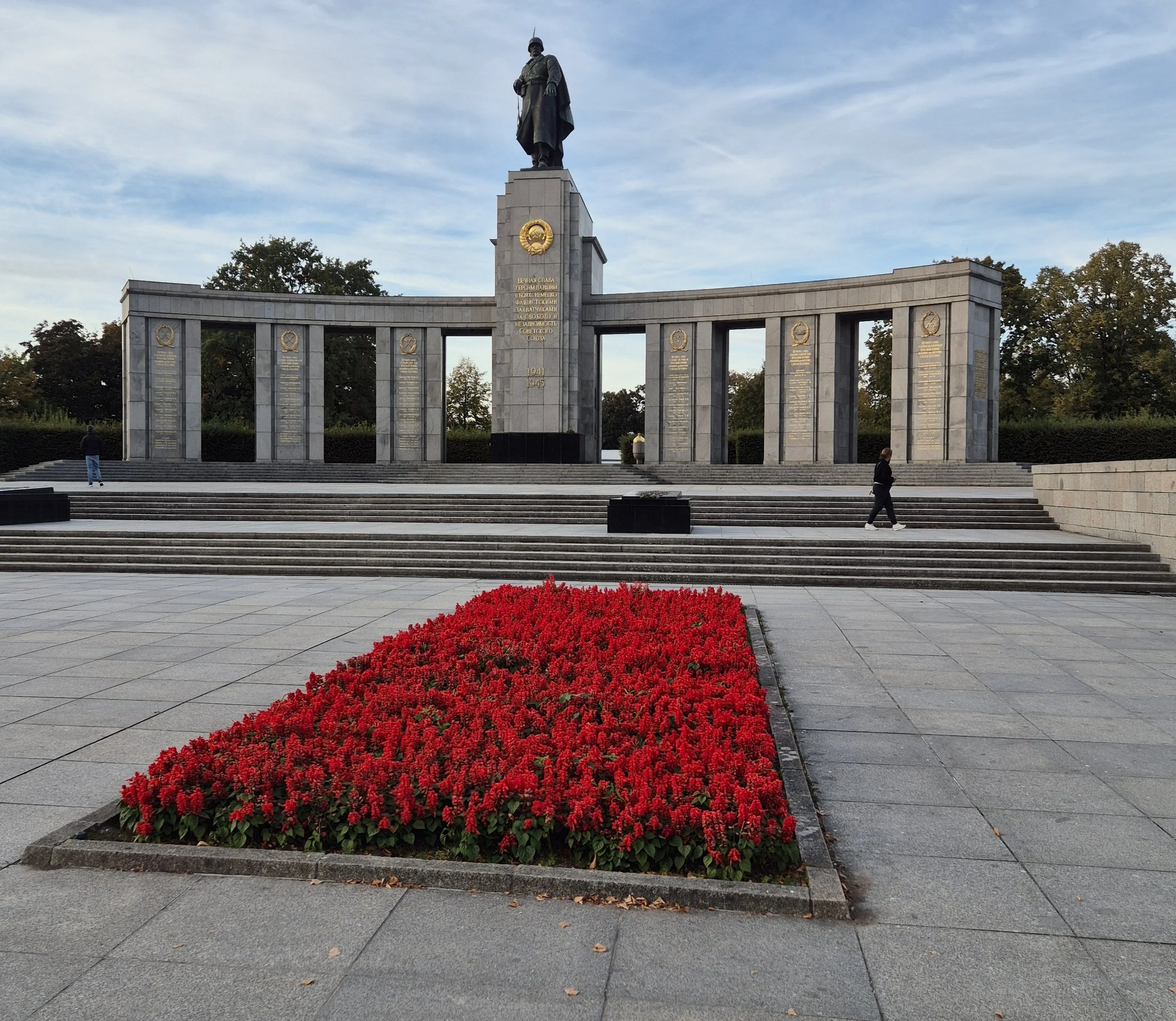
Nearby is the Russian Monument (Photo 4) with its WW2 tanks and gigantic sombre structure to the 80,000 Soviets killed in the Battle for Berlin. This is the oldest of war memorials, unveiled on 11th November 1945 and stands very much in West Berlin. Soviet Honour Guards watch over this sight which includes 2 T34 tanks, 2 152mm howitzers and an 8 meter bronze statue of a Soviet soldier: it is very dramatic, and its location is within sight of the Brandenburg gate and the Reichstag!
We then headed to our hotel, near Alexander Platz, where we all dined together on traditional German food.
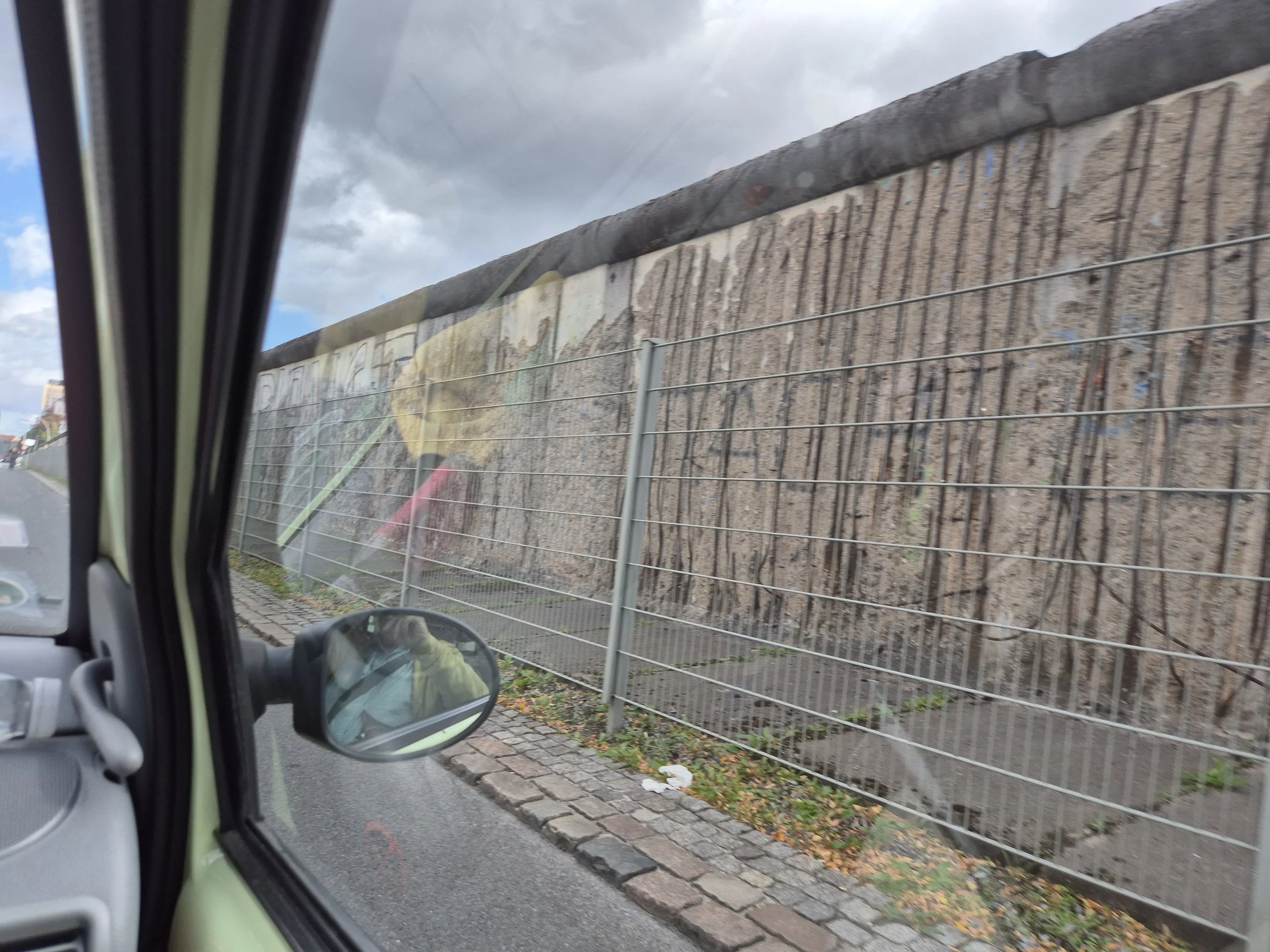
On Day Two our most excellent and well-read Berlin guide, Nick Jackson, met us in the lobby for his astonishing Third Reich Tour -from the Jewish Memorial to Goering’s Air Ministry, Colonel Claus von Stauffenberg’s execution post (Photo 5) and past a piece of the Berlin wall (Photo 6) to the Topography of Terror, where prisoners were tortured in the most inhuman way. Berlin's tragic history was unfolding before us. For those who don’t know, von Stauffenberg was a key player in the assassination attempt on Hitler’s life.
The group had the chance to visit Checkpoint Charlie for themselves. I lunched with Dietmar right by the crossing point, (Photo 7) through which I had been driven to the East in 1979 on my way to the opera Coppelia, an 1870 classic comic ballet, in the East. During the interval, by chance I met Tonie and Valmai Holt of the famous Major & Mrs Holt’s Battlefield Tours. This chance encounter would change my life for the better, and the very fact that I am writing this article 47 years later, is because I met the Holt’s.
After lunch the group went on a sedate Spree River Cruise, including sailing under the famous von Moltke Bridge, over which the Soviets poured on their way to capturing the Reichstag. We then took our place for a visit to the Reichstag, scene of much bitter fighting during April/May 1945, now the seat of Parliament. This nighttime tour gives one a wonderful sight of Berlin's lights. Then we headed to dinner in the restaurant Augustiner, which was a great choice.
The next morning, as we left Berlin for Colditz, I gave the group a potted history of the Battle for Berlin which I had prepared, ending with the Soviets placing the Red Flag on the burnt-out Reichstag on 1st May 1945. In fact, the Reichstag was taken during the night of the 30th April, but Stalin wanted a photograph worthy of the world media.
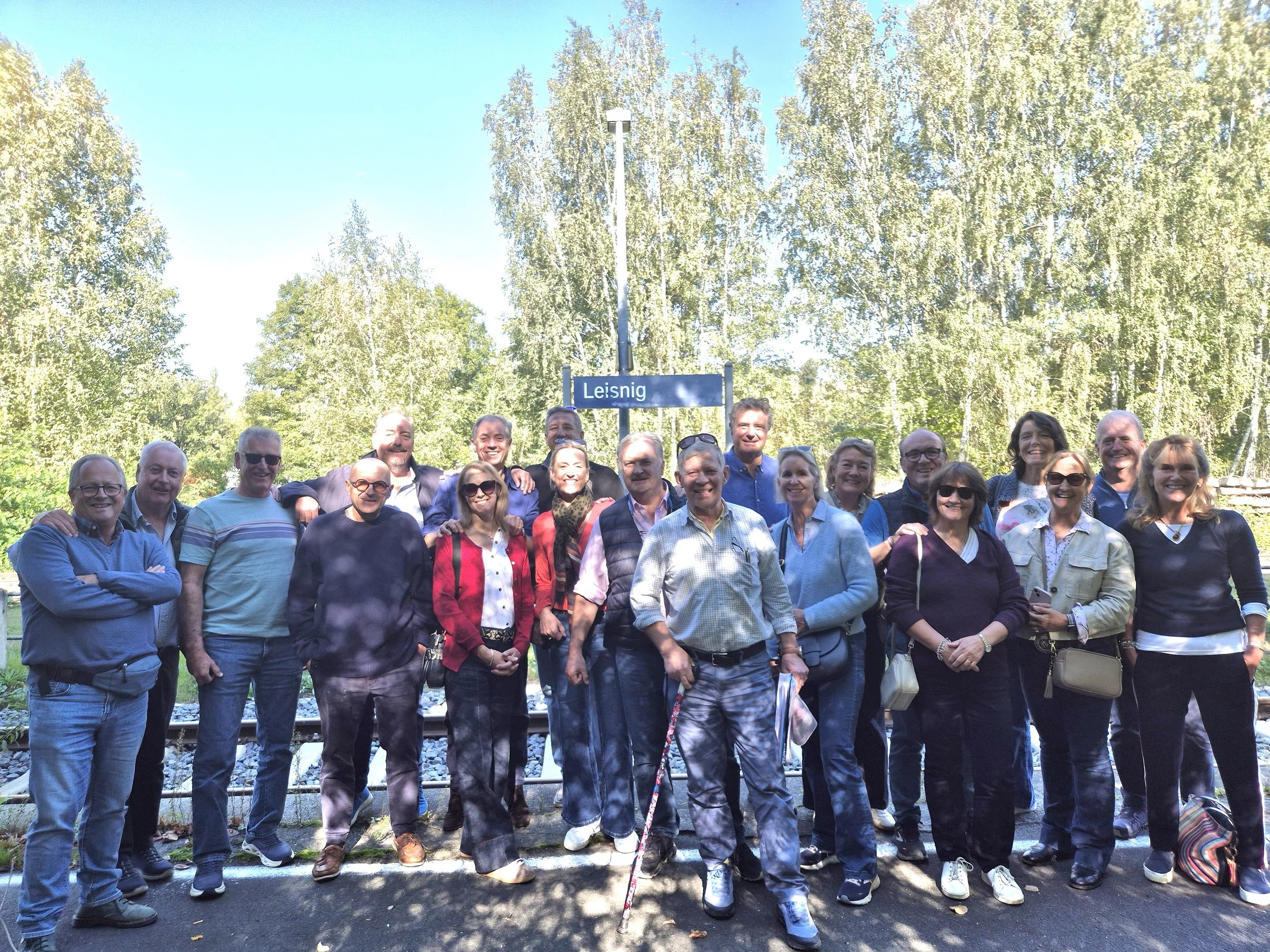
There was great excitement as we headed for Colditz and our first stop was Leisnig station (Photo 8) where Airey Neave and Dutchman Tony Luteyn successfully escaped in January 1942. Neave was the first British prisoner to successfully escape from Colditz, and I gave them the full story whilst standing on the very platform from where he had escaped. I explained how the following day, Hyde-Thompson with a Dutchman called Donkers had tried the same route, but the German station authorities were prepared for them, and they were returned to Colditz.
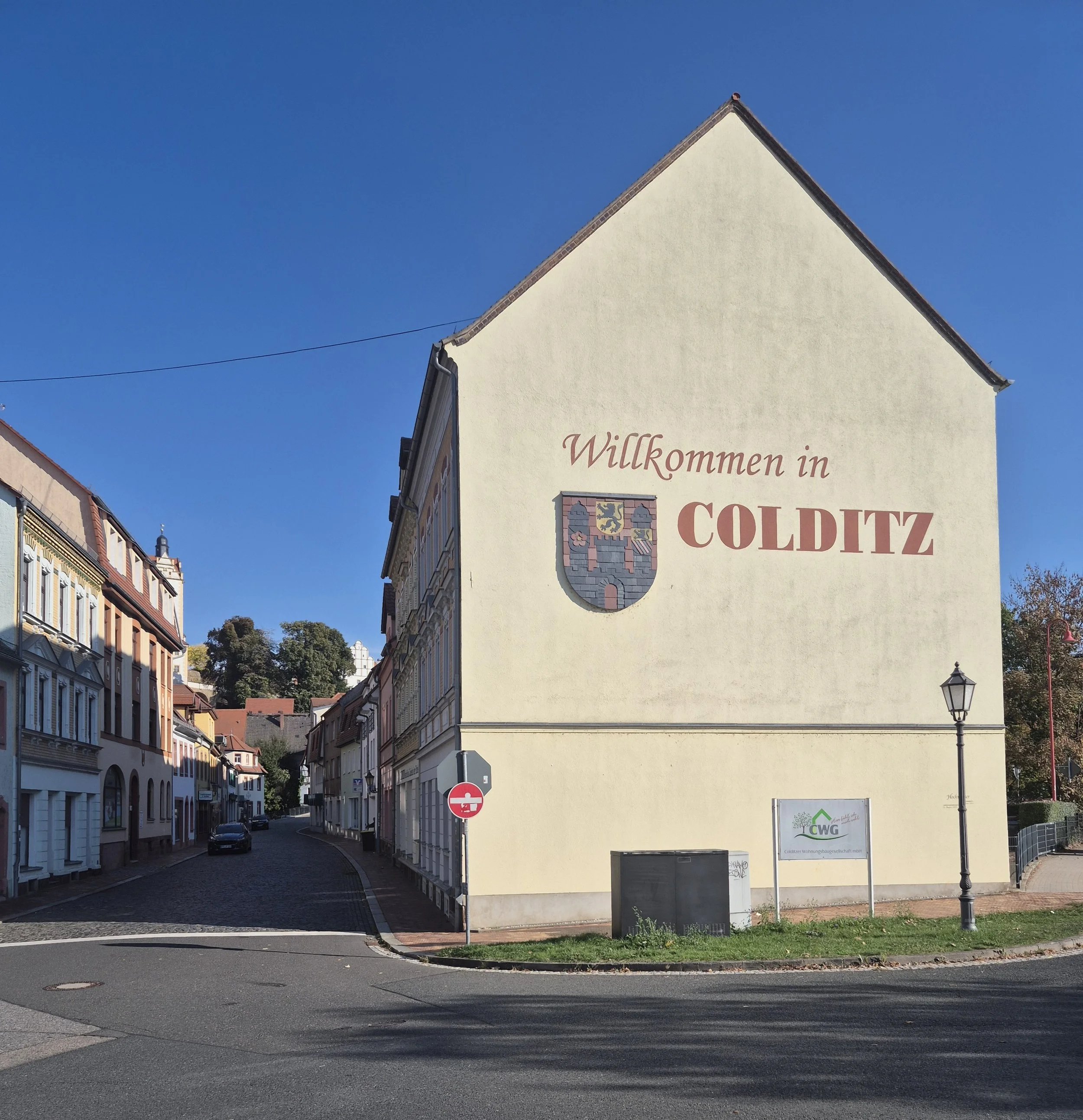
The group were loving these stories of ‘daring do’ and the next stop was the old Colditz station; you can still see the railway tracks. From there we walked to the meadow near to where the glider would have landed had it been launched and where one gets probably the finest view of Colditz Castle. (Photo 12) I had deliberately planned it so that we wouldn’t enter the castle until the following day, so the group found it all rather tantalising. (Photo 9)
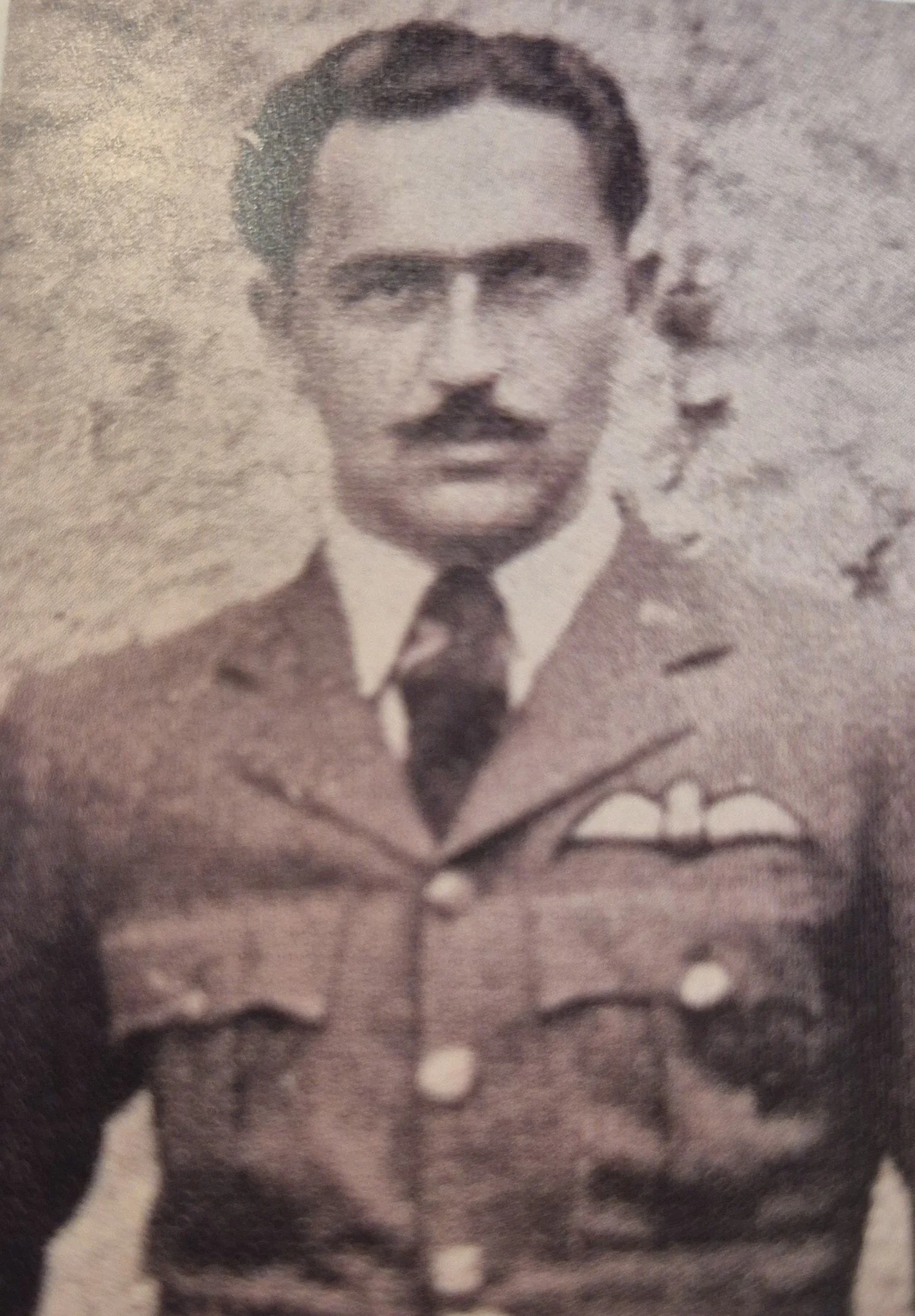
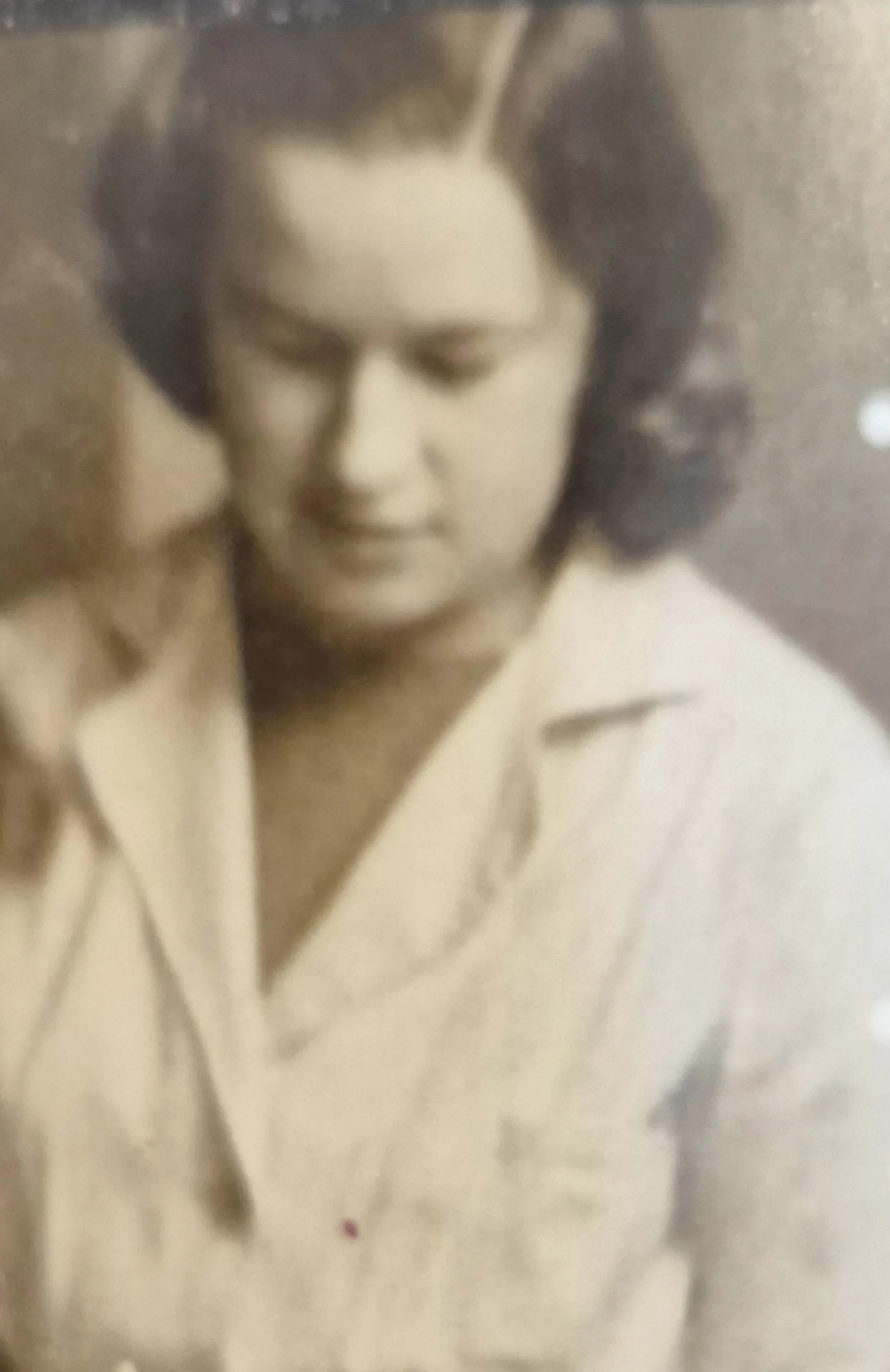
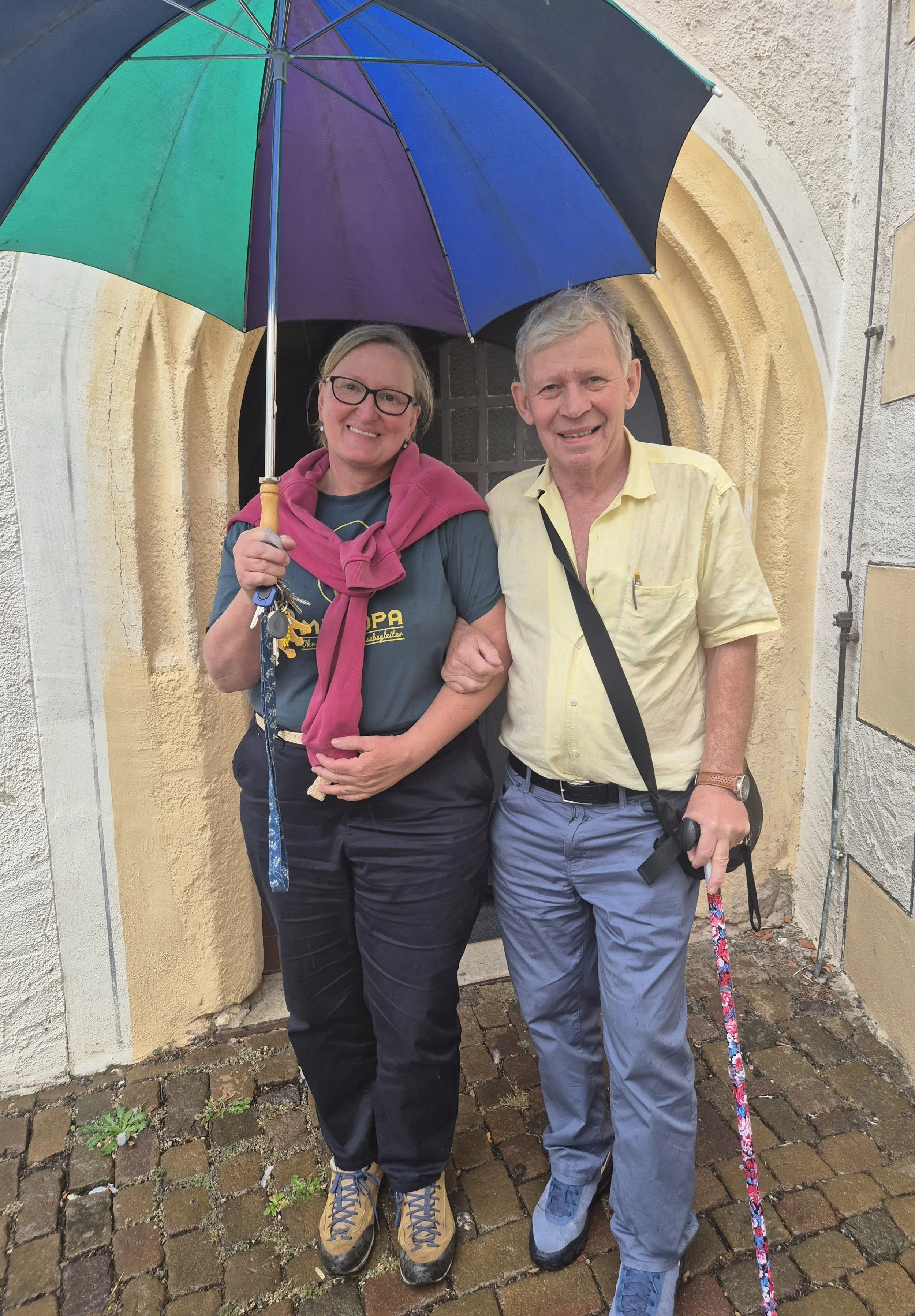
We walked into Colditz Town Square before I told them the story of the romantic Czech POW, Flight Lieutenant ‘Checko’ Chaloupka (Photo 10 ) and his dentist assistant (Photo 11). Checko was fluent in German and struck up a conversation on the train, en route as a POW to Colditz, with a 19 year old pretty girl called Irmgard Wernicke, who worked in the Colditz Dentist. They were smitten by each other, and Checko, by deliberately damaging his teeth, managed to get an appointment with the dentist, to pursue the romance, which certainly involved kissing – and maybe more! (He flew with the 312 (Czechoslovak) Squadron RAF from Duxford and was shot down over the Dutch coast). I hoped I had whetted their appetite. I also showed them the town gaol, where my father had been a prisoner with Dominic Bruce when the seven members of Operation Musketoon arrived at Colditz. They later executed at Sachsenhausen Concentration Camp, in flagrant breach of international law. Straight to our hotel Radisson in Leipzig and out to dinner. Amongst the group we had a leading cuisine expert and a fine wine connoisseur; my goodness didn’t we dine and drink well.
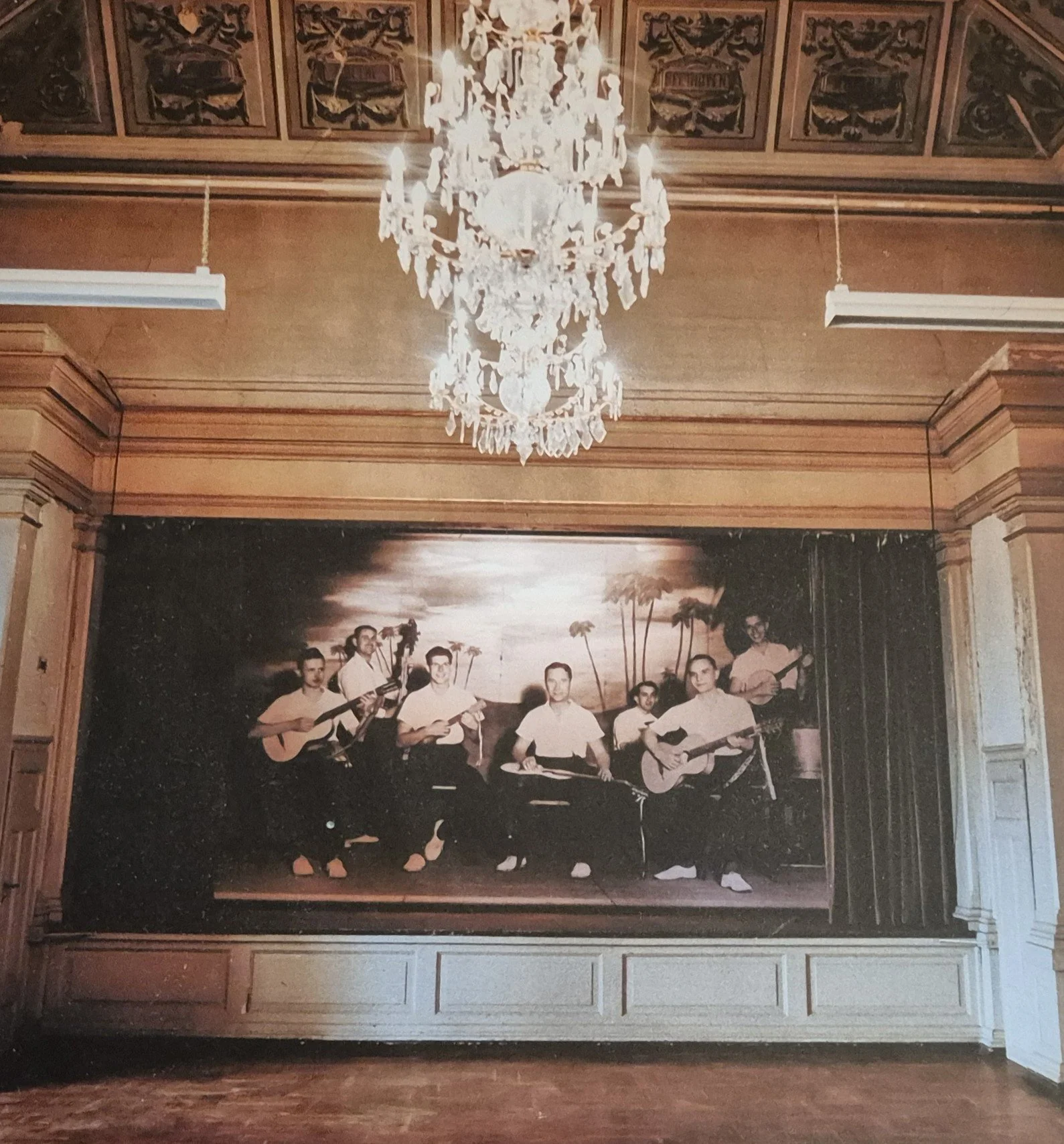
On Day Three we headed back for Colditz Castle itself, starting with my PowerPoint presentation of 137 images on this the most famous of POW camps. We also had a self guided tour of the castle with a ‘Histopad’ and then an official guided tour of the outside of the castle, arranged by my friend Regina (Photo13) supplemented by my stories. My contribution included stories from the exercise park, where Michael Sinclair, buried in Berlin, was shot whilst trying to escape. Also, the first ‘Home Run’ escape by Frenchman Alain Le Ray, and the story of the four Dutch officers who escaped from the drain in the park. The group clearly found the whole experience riveting. We also went into the theatre (Photo 14) and explored the attic where the glider had been made. We had tea and cake in Colditz town and then returned to our Leipzig hotel.
En route, I gave them a short potted history of Leipzig, from its happy days at the centre of European music, Bach, Mendelson, Schubert and Wagner to the cruel deportation of 80,000 Leipzig Jews to the East.
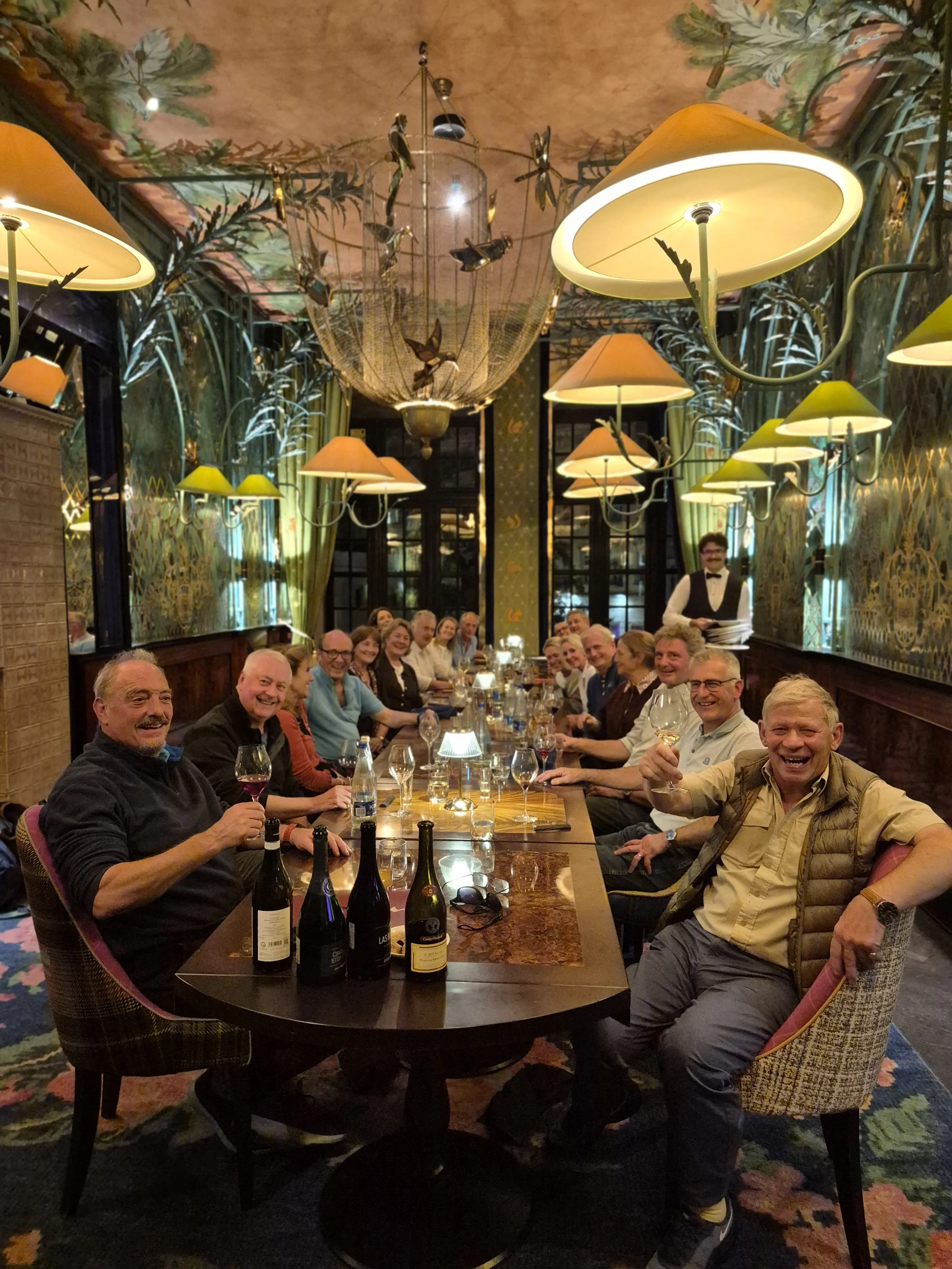
Day five - we embarked upon the 9 hour journey to Krakow - it was not as bad as it might sound. We are a happy group of friends, and we eventually checked into our hotel Krakow, and we dined in what is possibly the best restaurant in Krakow; our cuisine and wine experts did us proud. (Photo 15). From Krakow we had two sites to visit; Auschwitz and its appallingly sad history; and the astonishing Salt Mines. I don’t think I could ever do justice to Auschwitz by describing the visit there and to the other sad places, so I simply say, “Let us never forget.”
Then it was time to head to Krakow Airport for EasyJet flight returning to London. As I write this article, I have received a lunch invite by a couple who were in the group for 29 November, and I now understand that 10 of us from the group will be together!
I understand that the group ‘leader’ Christopher Guinness has agreed to my suggestion for a “The Great War on the Western Front” tour in September 2028.
I believe that I am the longest serving battlefield guide in the field today – 44 years non-stop.
I qualified first on the subject of The Great Battles of the Western Front in Ypres and The Somme, before going on to the Second World War, and I was Co-Chairman of the Thiepval Educational Centre on the Somme. Two good reasons to go there.
If you want to hire me as a guide or speaker, just make contact.
07710 779773